





Maximize the Carpet Cleaning Workflow

Prespray, Stain ID, Post-Treat, and Rinse: A Better Carpet Cleaning Workflow
Better carpet cleaning results start before the extraction pass. When technicians choose the right prespray, identify and treat what remains, and fully rinse the carpet, they improve results, reduce callbacks, and protect margins.
For professional cleaners, this is not about using more chemistry. It is about using the right chemistry in the right order.
At CoreField Supply, a better carpet cleaning workflow comes down to four key steps: prespray, stain ID, post-treat, and rinse.
Why workflow matters
The wrong chemistry or poor sequencing can leave residue behind, shorten appearance retention, and turn one job into a return visit.
A consistent workflow helps crews:
• clean more efficiently
• improve first-pass results
• reduce unnecessary rework
• match chemistry to fiber and soil conditions
• build consistency across technicians and crews
Step 1: Start with the right prespray
Prespray does most of the heavy lifting in carpet cleaning. When the prespray is matched correctly to the level and type of soil, the rest of the process becomes more efficient.
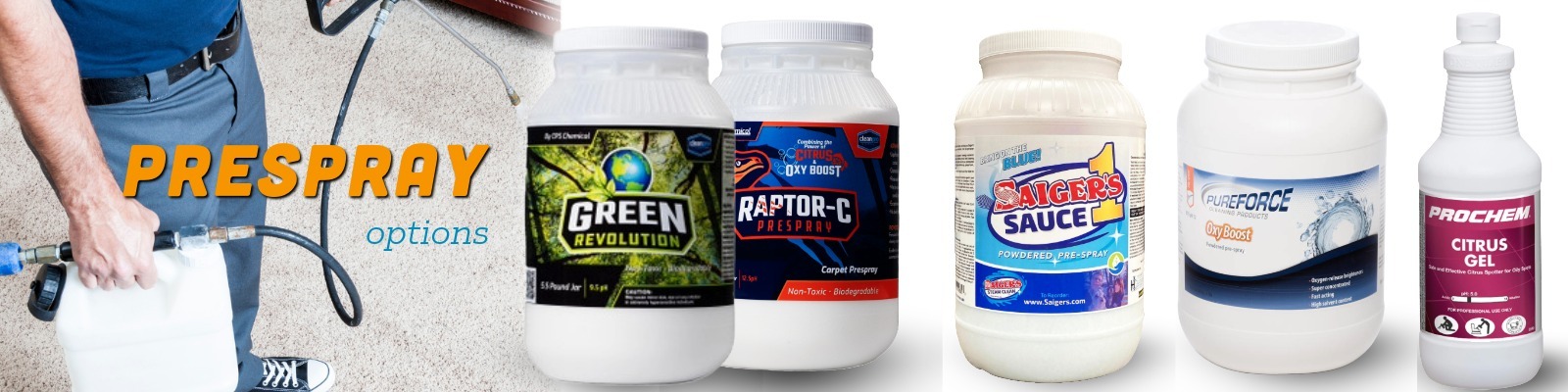
For general carpet cleaning, CPS Green Revolution Universal Powder Prespray is a dependable option for a wide range of jobs, including wool carpet. When heavier soil and tougher conditions call for more cleaning power, CPS Raptor-C 12.5 pH Powdered Prespray is a stronger fit.
If you are using a less aggressive prespray than Raptor-C, you can add more cleaning power with PureForce OxyBoost or PureForce CitrusForce Powdered Enzyme Pre-Spray. Prespray selection should reflect the soil load, fiber type, job conditions, and overall cleaning goal.
Step 2: Identify the stain and post-treat what remains
Post-treatment should solve what is left after the main cleaning process. It should not replace proper prespray selection or rinse strategy. The goal is to use the least aggressive effective solution first.
When stains remain, start with two questions:
• What is the soil or stain category?
• What fiber or surface are you cleaning?
Common categories include food and beverage stains, oil and grease, urine and odor contamination, synthetic red dye stains, organic grass and blood stains, makeup and gum residue, and other unknown spots that require a more strategic approach.
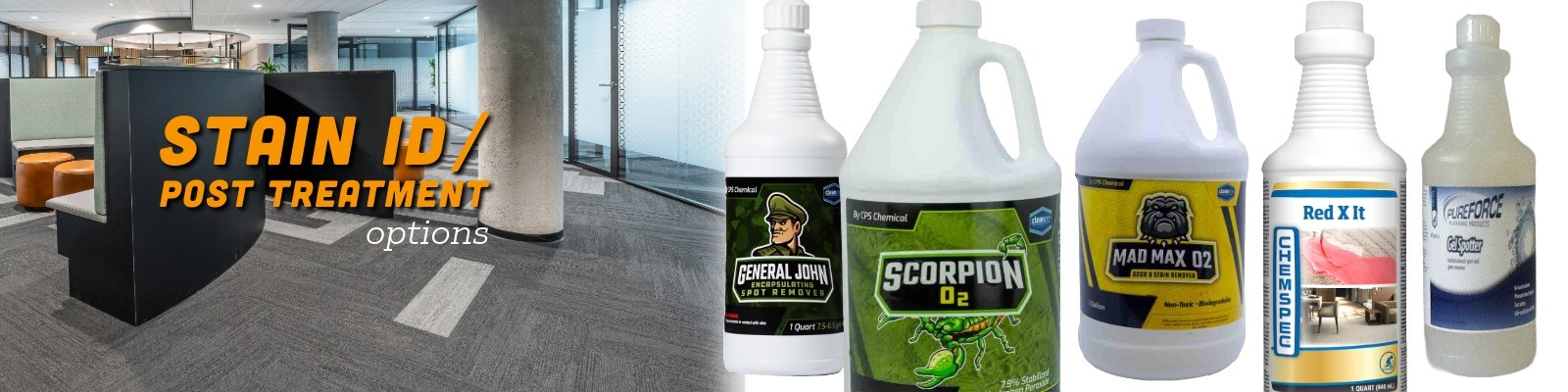
For after-cleaning care, a general-purpose spotter like CPS Chemical General John RTU Encapsulating Spotter is a strong option for basic spots the prespray may not have fully removed, and it can also be a useful product to leave with the customer.
For urine, feces, blood, grass, soil, or other organic spot or stain issues, try CPS Mad Max Urine Treatment or CPS Scorpion O2 Stabilized 7.9% Hydrogen Peroxide.
For synthetic dye stains or boxed red wine spots, Chemspec Red X IT (Exit) Reducer Spot Remover is an excellent reducing agent.
For topical residue such as makeup, heavy grease, or bubble gum, PureForce Citrus Gel Spotter is an excellent choice.
Step 3: Rinse thoroughly for residue control
Be sure to fully rinse the carpet after using chemistry to avoid residue that can attract future re-soiling like a magnet. A proper rinse step helps pull the pH down, improve residue control, and leave the fabric clean and soft.
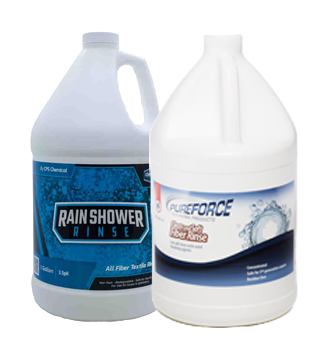
It is best to use a self-neutralizing detergent rinse or an acid rinse, such as CPS Rain Shower Rinse, 3.5 pH All Fiber Textile or PureForce Clean & Soft Fiber Acid Rinse.
Rinse is where many jobs either protect the result or shorten its life.
A strong rinse step helps remove suspended soil, manage residue, and improve how long the carpet stays looking clean. If the rinse step is weak, carpets may look better initially but re-soil faster.
This is one of the biggest differences between a job that only looks clean today and one that stays cleaner longer.
A simple repeatable workflow
1.
Prespray
Use CPS Green Revolution Universal Powder Prespray for general jobs, or CPS Raptor-C 12.5 pH Powdered Prespray when heavier cleaning is needed. Add PureForce OxyBoost or PureForce CitrusBoost when more punch is needed with a less aggressive prespray.
2.
Identify and post-treat
Evaluate what remains after cleaning and choose the least aggressive effective solution based on the stain category and fiber.
3.
Rinse thoroughly
Use CPS Rain Shower Rinse or PureForce Clean & Soft Rinse to help control residue, lower pH, and improve long-term appearance.
Recommended chemical pairings
General carpet prespray
Heavier carpet prespray
Prespray boosting option
General spotting /
leave-behind spotter
Organic stains and odor issues
Synthetic dye stain correction
Makeup, grease, and gum residue
Rinse and residue control
Final takeaway
Better carpet cleaning results usually come down to better decisions before, during, and after extraction. When crews improve prespray selection, stain ID, post-treatment decisions, and rinse strategy, they get better results, reduce callbacks, and work more efficiently.
Need help building the right carpet cleaning setup for your jobs? Explore carpet and upholstery chemistry from CoreField Supply (formerly Clean Pro Supply).